
- 中文
- English
LED suppliers knit out the basics
Time: 2019-07-16 00:00:00
Author: HONWAY
Click:
LED skills throughout: LED lighting value of the power crisis, the greenhouse effect and the growing deterioration of the ecological environment when reminding people that the Earth is now exhausted, changing the way people get power and improve the use of power has become the current world consensus.
LED skills throughout: LED lighting value of the power crisis, the greenhouse effect and the growing deterioration of the ecological environment when reminding people that the Earth is now exhausted, changing the way people get power and improve the use of power has become the current world consensus. As in the world's electricity use structure, lighting electricity accounts for about 19% of the total electricity consumption; Britain Brian Edwards in its preparation of the "sustainable construction" pointed out that in the United Kingdom consumed all the power about half of the construction, and the construction of artificial lighting energy consumption accounted for its construction of the total energy consumption of 15% -50%; in China's lighting electricity accounts for about 12% of the country's total electricity consumption, and China The annual growth rate of electricity consumption for lighting (preserved estimate) is about 5%. From the above data, we can see that although the proportion of electricity used for lighting differs from country to country depending on the level of economic development, lighting energy consumption has become an important part of power consumption in all countries. The issue of lighting energy saving has also become a difficult problem that governments and professionals must face. According to the survey, in 2007, China's whole society used about 2,421 billion kilowatt hours of electricity, according to the calculation of 12% of the whole society's electricity consumption, in 2007, China's lighting electricity consumption is about 290.5 billion kilowatt hours, if 50% of China's lighting equipment choose LED lamps and lanterns (calculated by using 50% of the low-end products), at least 72.6 billion kilowatt hours of electricity can be saved each year, which is equivalent to build 2 Three Gorges Power Station or 8 to 9 sets of One million kilowatts of supercritical coal-fired generating units, can save power plant construction costs of nearly 100 billion yuan, annual savings of nearly 12.52 million tons of raw coal, if coal-fired power generation per watt-hour emissions of 0.638 kg of carbon dioxide, can also cut 46.32 million tons of carbon dioxide emissions each year. Now the world's LED development and production is mainly concentrated in the United States, Europe, Japan and other countries and regions. Australia decided to stop using general incandescent lamps in 2010, replaced by LED lighting supplies, becoming the first country in the world plans to ban the use of traditional incandescent lamps. But the use of LED lighting products in the country is more difficult to start. Statistics show that in China, LED and other energy-saving lamps and lanterns throughout the rate is still very low, and now the annual sales of incandescent lamps is still about 2 billion, the use of incandescent lamps in small and medium-sized urban residents generally more than 50%. New efficient light sources, especially white light sources (for general lighting) to develop a significant reduction in lighting electricity consumption has a very important effect, because it can reduce the growth rate of electricity consumption, and thus reduce the cost of new grid capacity, reduce power consumption and reduce emissions of greenhouse gases and other pollutants into the atmosphere. LEDs, especially white LEDs, are favored by a wide range of professionals because of their theoretical and practical superiority over traditional light sources. LED light supplier is a new power profession, a green profession, an environmentally friendly profession and a profession that works for our future generations, a new milestone in the history of human lighting!
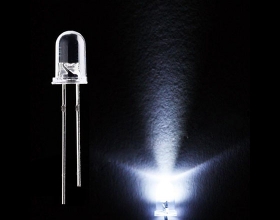
LED history of development in the 19th century before Edison created the electric light, the human way to complete the lighting is very simple, that is, directly with the direct light of various sources of fire, such as candles, oil lamps and so on. These light-emitting devices, although in the long history of mankind lit a long years, but because of the extremely low luminous power and luminous quality, only dust in the museum of history, into the 20th century, following the outbreak of mankind's new industrial revolution, Edison created a new type of incandescent lamp as the representative of the lighting equipment, officially become the main stream of human life in the departure of light-emitting equipment. After the incandescent lamp, human society's electric lighting equipment has roughly gone through three important stages of development, the three stages of the representative light source were fluorescent lamps, high-intensity discharge lamps and LED light source. Among them, high-intensity gas discharge lamps due to the strict requirements of the use of environmental, high cost, is not the main stream of civilian lighting equipment, so and our daily life is closely related to the light source equipment, as long as incandescent, fluorescent lamps and LED light source of these three categories. In these three categories of light sources, LED lighting technology is the latest, the most advantages of a lighting technology, therefore, since the 20th century 60 era, accompanied by the development of modern semiconductor technology, has been a large number of widespread use, especially after entering the 21st century, LED lighting skills derived from the LED display skills and LED auxiliary display skills, now has shown increasingly strong The momentum of development. In addition to the LED light source in the field of daily power lighting is spreading, now in the display field and LED-related equipment are mainly two kinds: one is the direct use of LED imaging LED display, the other is the use of LED's excellent light-emitting characteristics, the LED as a TV backlight to use the new LCD TV. Another high exposure of OLED display skills, although only one more letter than LED, but because of the large gap in skills, can be treated as a new class of display skills, and therefore not in the scope of this article. The following is the history of LED development: 1907 Henry Joseph Round first observed in a piece of silicon carbide electroluminescence phenomenon. Because the yellow light emitted was too dim for practical use; the more difficult part was that silicon carbide and electroluminescence could not be well accustomed to each other, and the study was abandoned. In the late twentieth century, Bernhard Gudden and Robert Wichard used yellow phosphorus luminescence extracted from zinc sulfide and copper in Germany. In 1936, George Destiau published a report on the emission of light from zinc sulfide powder. Following the use of electric current and widespread awareness, the term "electroluminescence" was finally introduced. In the 1950s, British scientists used the semiconductor gallium arsenide in experiments on electroluminescence to create the first LED with modern meaning, which was introduced in the 1960s. It is said that in the early experiments, LEDs needed to be placed in liquefied nitrogen, and further manipulation and breakthroughs were needed to enable high power operation at room temperature. At the end of the 60's, the first visible red LED was created by using phosphide on a GaAs substrate, and the change of GaP made LEDs more efficient, brighter red light and even orange light. By the mid-1970s, gallium phosphide was used as a light source, and then it announced gray-white green light. LEDs with a double layer of gallium phosphide pistons (one red and the other green) could announce yellow light. At this time, Russian scientists used adamantine to produce LEDs that announced yellow light, although it was not as efficient as the European LEDs. But at the end of the 70s, it can announce pure green light. 80s to the use of gallium arsenide aluminum phosphide in the first generation of high-brightness LEDs, first red, then yellow, and finally green. By the early 1990s, the use of indium aluminum gallium phosphide produced orange, orange, yellow and green LEDs. The first historically significant blue LEDs were also introduced in the early 1990s, again using gold sand - a barrier to pre-semiconductor light sources. In the mid-1990s, the ultra-bright GaN LED was introduced, followed by the production of high-intensity green and blue indium gallium nitride LEDs. The ultra-bright blue pellet is the center of the white LED, and this pellet is coated with phosphor, which is then converted to white light by absorbing the blue light from the pellet. Then the phosphor is converted to white light by absorbing the blue light source from the stamper. It is the use of this skill to create any visible color light. Today in the LED market can see the production of chic colors, light green and pink. The scientifically minded reader may realize by now that the development of LEDs has gone through a long and tortuous history. In fact, recently developed LEDs can not only emit pure ultraviolet light but also emit really "black" ultraviolet light. Then the history of LED development to low how far can go, do not know. Perhaps one day it will be possible to announce the ability to emit X-rays LED. pre-LED can only be used in the light, pre-computer display and digital watches. And now begins to present in the field of ultra-brightness. Will continue in the next period of time.

点击右上角
分享给朋友吧







 Long by picture save/share
0

Address: No. 7 Longshan Road, Taihu County Economic Development Zone, Anhui Province
Address: No. 188 Miaohong Road, Changshu City, Jiangsu Province
Consulting hotline:
0512-5267 9888
0556-4177 999
Address: No. 7 Longshan Road, Taihu County Economic Development Zone, Anhui Province
Address:No. 188 Miaohong Road, Changshu City, Jiangsu Province
Fax: 0512-55171795
Consulting hotline:
0512-5267 9888
0556-4177 999
Follow
—
Copyright HOIVWAY All rights reserved Su ICP No.18029291
